

Wheeled Schoolbag
Kids love backpacks with wheels, and parents agree, as it makes it easier to carry a sometimes heavy bag. Always equipped with straps, it can also be worn on the back. Ideal from the Middle Section to the end of primary school.
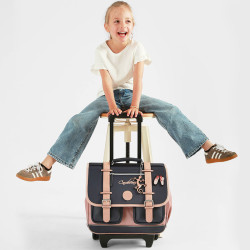
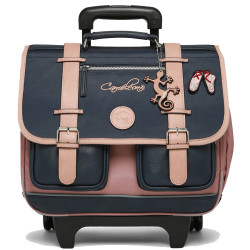
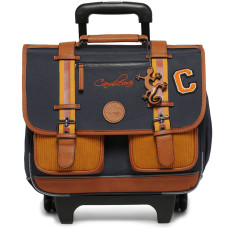
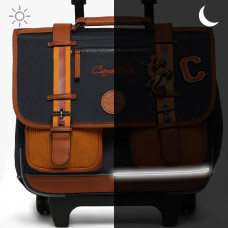
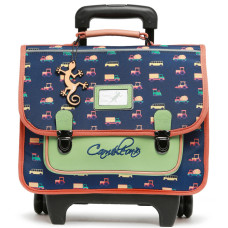
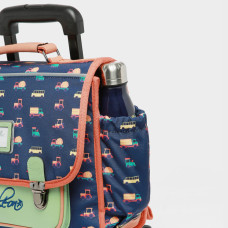
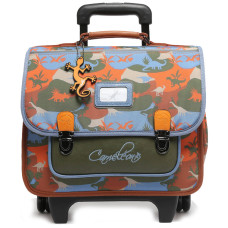
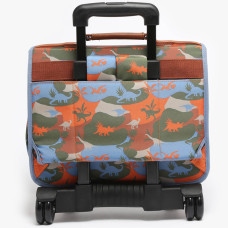
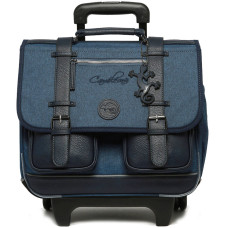
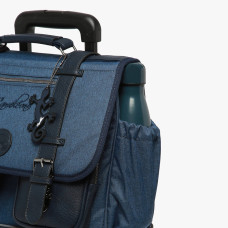
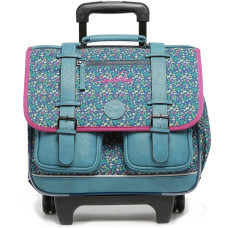
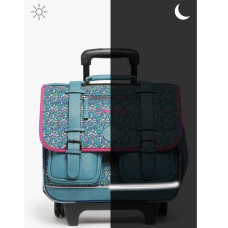
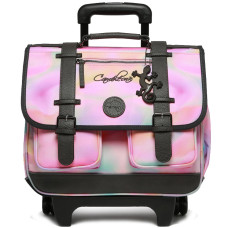
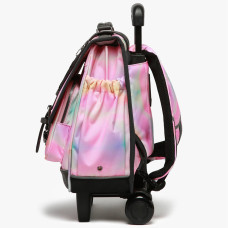
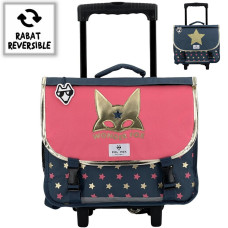
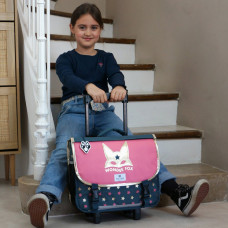
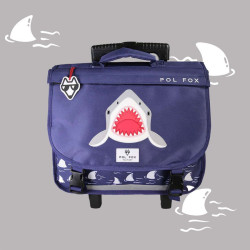
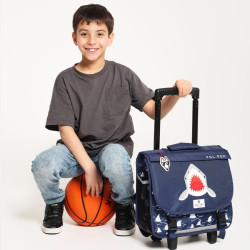
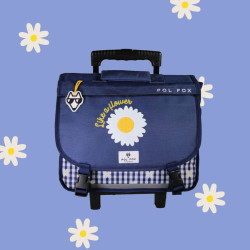
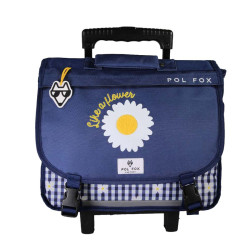
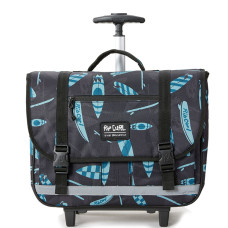
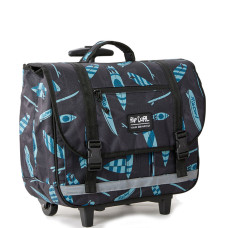
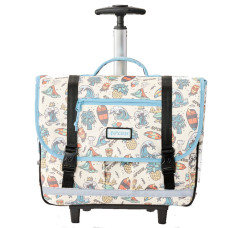
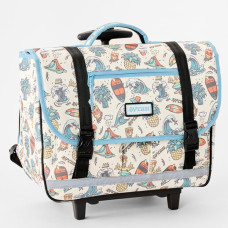
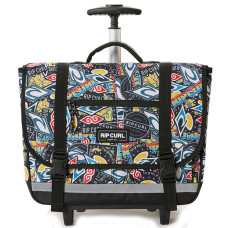
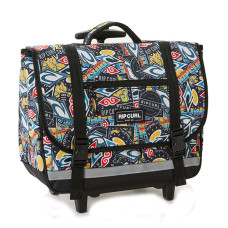
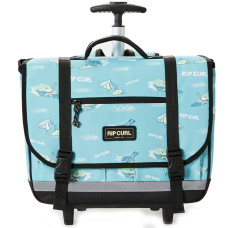
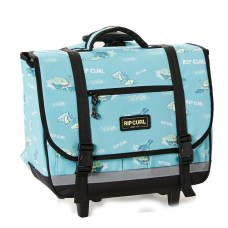
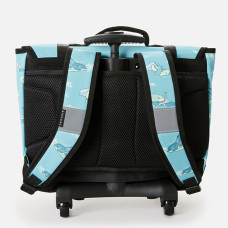
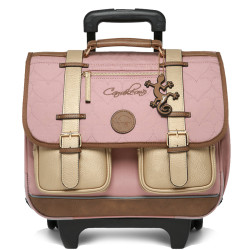
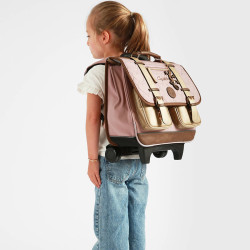
Children appreciate wheeled backpacks, and many parents see them as a practical solution for transporting a sometimes heavy bag. Always equipped with shoulder straps, these models can also be worn on the back. From middle school to the end of primary school, this type of wheeled backpack combines the use of a trolley with the flexibility of a classic backpack. The criterion that guides the choice here is mainly about the size, the empty weight and the ease of handling.
Advantages of the wheeled backpack for the child and school
The trolley backpack meets very concrete needs on a daily basis. What differentiates this type of bag from a classic backpack is the possibility of alternating between rolling and carrying depending on the journey.
- Reduces fatigue associated with prolonged carrying of a traditional backpack.
- Facilitates the transport of a heavy backpack on the way to primary school.
- Retains ergonomic shoulder straps to carry it on the back if necessary: stairs, uneven sidewalks, short trips.
- Brings a practical solution in the school environment, subject to a format adapted to the child's age.
- Remains appreciated by children for its simple handling and playful appearance.
Wheeled backpack: what age and what school?
The real question lies in the capacity, the size of the bag and the child's autonomy. In practice, a wheeled backpack is mainly suitable for kindergarten large section, primary school, and sometimes at the entrance to middle school if the trips are long and flat.
- From 4 to 5 years : compact and lightweight formats, adapted to the first school uses.
- From 6 to 8 years : intermediate volume, often sufficient for CP to CE2 classes.
- From 9 to 11-12 years : larger formats to accommodate folders, large format notebooks and more numerous supplies.
To give you an idea, a 35 cm model often suits the lower classes, while a 38 cm one better covers the needs of the end of primary school. To be preferred if you are looking for a compromise between capacity and maneuverability.
Brands and collections of trolley backpacks
Noix d'Arec offers several recognized brands, with different approaches in terms of style and format. The criterion that guides the choice here depends less on the brand name than on the structure of the backpack, its dimensions and the solidity of the trolley assembly.
- Caméléon : several distinct lines, with formats in 35 cm and 38 cm. The Actual, Retro, Vintage Color, Vintage Fantasy and Vintage Urban Boy collections cover a variety of styles.
- Pol Fox : 38 cm trolley models, with a more graphic approach and, on some references, reversible versions.
- Rip Curl : seasonal collections oriented towards sport and outdoor universes, adapted to children who prefer a more dynamic style.
In fact, durability depends mainly on the quality of the wheels, the telescopic handle and the outer fabric. Same logic as for the cabin format in luggage: the structure counts as much as the aesthetics.
Available sizes and formats: 35 cm and 38 cm
Two formats dominate this segment: 35 cm and 38 cm. What differentiates these sizes is not just the width of the backpack, but the real capacity to hold 24 x 32 cm notebooks, a pencil case and sometimes a snack without straining the closures.
- 35 cm : compact format, generally recommended up to CE2 according to the child's morphology and the volume requested by the school.
- 38 cm : larger format, suitable for CM1, CM2 classes and sometimes at the beginning of middle school.
In practice, a 35 cm trolley backpack remains easier to handle in corridors and stairs. A 38 cm becomes more relevant if the child regularly transports several large notebooks or a flexible folder.
Various designs and patterns for girls and boys
Design matters, as it also conditions the child's adherence to the daily use of the backpack. To be preferred if you are looking for a model that will be used all year round without boredom: sober patterns, stable colors, details little marked by trends.
- Dinosaur patterns: playful register, often requested in kindergarten and early primary.
- Leopard patterns: more assertive look, with a visible graphic touch.
- Classic stripes: discreet style and easy to keep over time.
- Floral patterns: softer orientation, frequently chosen on primary formats.
- Geometric patterns: more contemporary drawing, appreciated for its visual neutrality.
Wheeled backpack for boys or girl version, the useful criterion remains the same: choose a visual that pleases the child without forgetting the weight, dimensions and quality of the finishes. Some models also exist in more sober versions for older children.
Practical features of the trolley backpack
Beyond style, the difference lies in the construction elements. In practice, for daily use, a wheeled backpack must remain stable when loaded, easy to pull and still bearable on the back for a few minutes.
- Ergonomic shoulder straps : useful for stairs and passages where wheels become less practical.
- Robust wheels : key point for longevity, especially on sidewalks and uneven floors.
- Reinforced handle : better grip and smoother traction.
- Various compartments : allow organizing notebooks, agenda, pencil case and small accessories.
- Resistant materials : polyester or technical canvas, often chosen for their resistance to abrasion.
- Reflective strips : useful to improve visibility on the home-school journey.
The combination of trolley and shoulder straps brings real flexibility of use: roll on flat surfaces, carry occasionally on stairs or uneven terrain. The criterion that guides the choice here remains simple: if the journey is long and relatively smooth, the wheeled backpack makes full sense.
To choose well, check three points before anything else: the format accepted by the school, the weight of the empty backpack, and the child's ability to handle it alone. It is generally this trio that allows determining the most consistent model for primary school.